What Storm Watch is
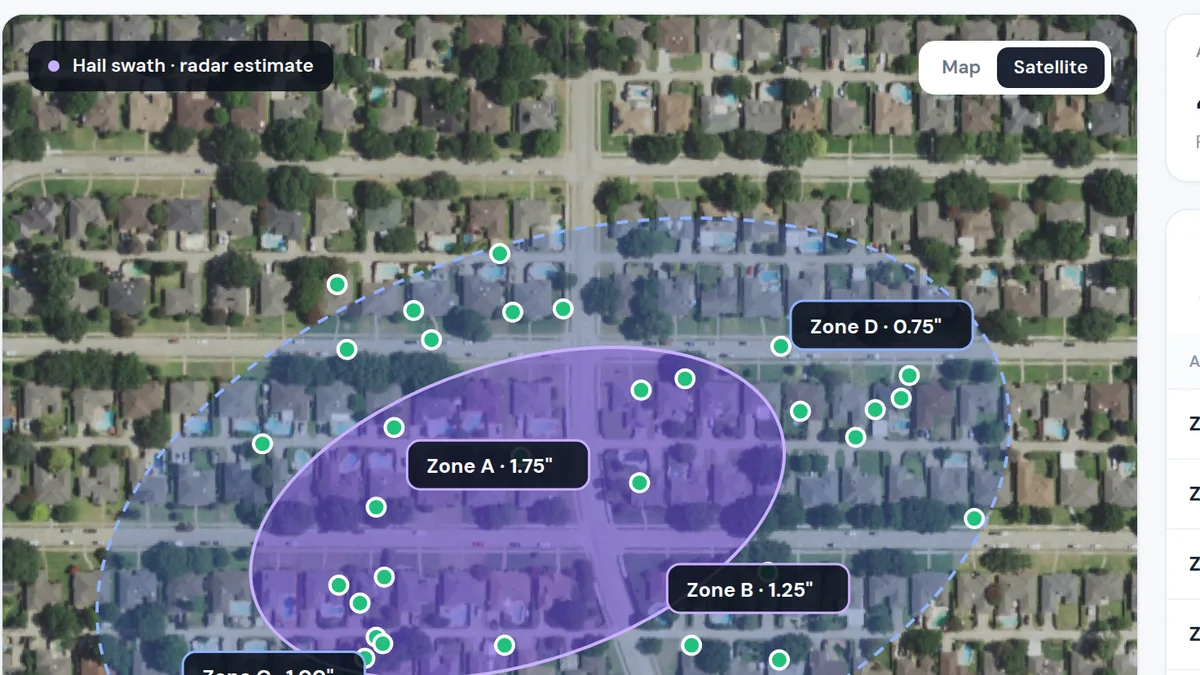
Storm Watch is a custom system we build for roofing and restoration companies. It watches storm activity across your service area and flags the places that were actually hit, so your team isn't guessing from a weather app.
Your staff stays in control. They review the flagged areas, decide which opportunities are worth pursuing and in what order, and the system queues outreach: past customers in those areas first, then new homeowners through your normal channels, with scripts written for storm conversations.
It is a prioritization tool. It doesn't replace an inspection, and it doesn't make promises about insurance claims. It helps you be in the right place first.
What people are using it for
Checking on past customers
Calling or texting customers whose homes are in a hit area to offer a free post-storm inspection.
Planning canvassing routes
Sending crews and door-knockers to the neighborhoods that were actually hit, not the whole county.
Loading the dialer
Pushing a storm-area list into the dialer so the team can make hundreds of calls the morning after.
Turning on storm ads
Launching storm-specific campaigns only in affected zones instead of spending across the whole market.
Why people use it over the alternatives
Storm season is a race. Homeowners often book whoever reaches them first with a credible offer. The companies that win are not always the best roofers; they are the ones who know where to go and get there first.
Most teams track storms by watching the news and their phones. That works for the big ones, but misses smaller hail events and wastes effort on areas that barely got rain. A system that flags real impact and queues outreach gives a small team the reach of a big one.
| Option | What usually happens | With Storm Watch |
|---|---|---|
| Watching weather apps | Someone has to notice, guess the impact and tell the team. | Affected areas are flagged for the team to review. |
| Canvassing everywhere | Crews spend days on streets that were never hit. | Effort goes where the storm actually landed. |
| Waiting for calls | Homeowners call whoever reached them first. | Your company is the first call they get. |
When you should not use it
- You don't work in a storm-prone area.If hail and wind events are rare where you operate, invest in reactivation and referral systems instead.
- You can't handle the volume.A storm can create more demand than you can inspect. Plan crew capacity before you turn outreach on, or you burn trust.
- You want to pressure people.Storm outreach is under scrutiny in many states. Keep it helpful and compliant: offer an inspection, not scare tactics.
Tactics that make it work
Start with your own customers
People who already trust you convert best. Check on them first, then work new neighborhoods.
Have scripts ready before the storm
Write and approve your storm call, text and email scripts in the off-season, so you can move the morning after.
Review before you blast
Let a person confirm the area and the priority. A false alarm sent to thousands of homeowners hurts your brand.
Pair with instant answering
Storm outreach creates inbound calls. Make sure an AI receptionist or a staffed line catches every one.
Know your local rules
Check your state's rules on contractor solicitation and insurance-related claims before launching outreach.
Built for a roofing company's storm season
We designed Storm Watch with a roofing company that wanted to stop reacting to storms after their competitors already had. The brief was clear: staff review and prioritize storm-related opportunities, and the system makes sure the outreach happens. We wrote the storm scripts alongside it, so the team wasn't drafting messages the morning after a hail event.
It sits next to the other systems in that build: a lead finder, the parallel dialer, an AI sales agent and an AI voice agent to catch the inbound calls. Storm Watch tells the team where to go. The rest of the stack makes sure they get there first and that nobody who calls back gets a voicemail. If you want the math on why speed matters so much after a storm, read our storm season playbook.
Storm events are a big part of the year for roofing and restoration companies. The winners are the ones with a system that turns weather into a prioritized call list overnight.
If you are an owner who wants to win more of storm season without doubling your sales team, a system that flags the right neighborhoods and queues outreach lets your existing team move like a much bigger one.
- Know which areas were actually hit
- Reach past customers first, before competitors
- Keep a person in charge of priorities and messaging
for you?
On a short, personalized call we'll look at how your business runs today and show you how this would plug into your leads and tools. You'll get a straight answer on whether we can help you get similar results, and what it would take to win more inspections after every storm.
- Personalized to your business
- See the system working
- Honest answer on fit